How to Manage a Physiotherapy Clinic Efficiently: 10 Practical Tips
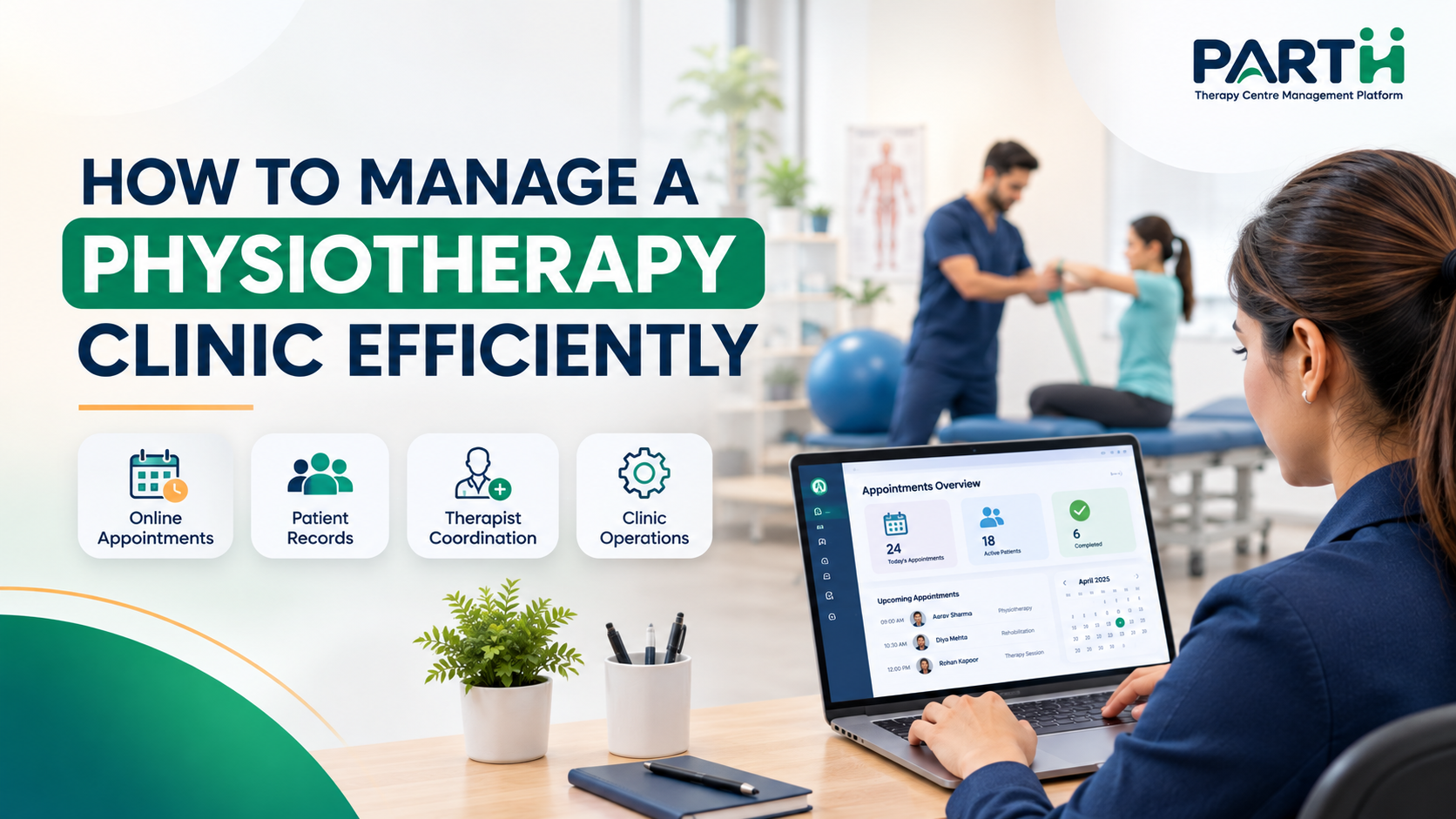
Running a physiotherapy clinic means balancing two important responsibilities: providing quality patient care and managing the daily operations of the practice.
A typical day may involve handling new patient registrations, scheduling appointments, coordinating therapists, conducting treatment sessions, maintaining patient records and managing payments.
When all these activities are handled manually or through disconnected systems, even a well-established clinic can experience operational challenges.
The solution is not necessarily to work longer hours or hire more administrative staff. It starts with creating an organised system for managing everyday clinic activities.
In this guide, we will explore 10 practical ways to manage a physiotherapy clinic more efficiently.
1. Create a Structured Appointment Scheduling System
Appointment management is one of the most important parts of running a physiotherapy clinic.
Unlike a one-time consultation, physiotherapy often involves multiple sessions over a period of time. Patients may need regular appointments, follow-up visits and changes to their treatment schedules.
Without a structured scheduling system, clinics may experience:
- Overlapping appointments.
- Confusion about therapist availability.
- Long patient waiting times.
- Missed or forgotten bookings.
- Difficulty managing rescheduled sessions.
How to improve it:
- Maintain a centralised appointment calendar.
- Assign appointments according to therapist availability.
- Record cancellations and rescheduled visits.
- Review the daily schedule before clinic hours.
- Send appointment reminders to patients.
A clear scheduling process helps receptionists, therapists and clinic owners stay informed about daily activities.
2. Maintain Organised Patient Records
Every patient has different medical histories, physical conditions, treatment requirements and recovery goals.
Keeping these details organised is essential for maintaining continuity throughout the treatment journey.
When patient information is stored in separate files or notebooks, retrieving previous records can take unnecessary time.
How to improve it:
- Maintain a separate profile for every patient.
- Record relevant medical history and assessment details.
- Keep treatment notes organised by visit.
- Update patient information when necessary.
- Ensure authorised staff can access the information they need.
Digital patient records can make information easier to organise and retrieve.
However, patient information should always be handled with appropriate confidentiality and access controls.
3. Improve Coordination Between Therapists and Receptionists
A physiotherapy clinic often depends on coordination between multiple people.
Receptionists handle registrations and appointments, while therapists manage assessments, treatment sessions and patient progress.
If these teams work with different information, misunderstandings can affect daily operations.
How to improve it:
- Clearly communicate daily appointment schedules.
- Define responsibilities for each staff member.
- Keep therapist availability updated.
- Establish a process for appointment changes.
- Ensure relevant patient information is shared with authorised team members.
Regular communication and clearly defined responsibilities help create a more organised working environment.
4. Monitor Patient Progress Regularly
Patient progress tracking is an important part of physiotherapy practice.
A patient may attend several sessions over weeks or months. Therapists need to review previous assessments, treatment notes and changes in the patient's condition when evaluating progress.
Simply recording that a patient attended a session may not provide enough information about the treatment journey.
How to improve it:
- Maintain initial assessment records.
- Record relevant observations during each visit.
- Document changes in functional ability and other appropriate measures.
- Review progress against treatment goals.
- Update the treatment plan based on professional clinical judgement.
For example, when treating a patient with a shoulder mobility problem, the therapist may record relevant range-of-motion measurements over different visits to review changes over time.
The American Physical Therapy Association highlights the importance of documenting interventions, patient responses, progress and plans for future visits.
This makes accurate and consistent documentation an important part of professional practice.
5. Establish a Consistent Patient Follow-Up Process
A patient's treatment journey does not end when they leave the clinic.
Patients may need upcoming appointment reminders, follow-up communication or guidance about their next scheduled visit.
When follow-ups depend entirely on staff remembering individual patients, some communication can be missed.
How to improve it:
- Maintain a list of upcoming follow-ups.
- Identify patients who have missed scheduled appointments.
- Send reminders before upcoming visits.
- Record follow-up communication.
- Keep patients informed about their next appointments.
A consistent follow-up process helps clinics maintain better communication and organise continuing care.
6. Organise Therapist Schedules and Responsibilities
When a clinic has multiple therapists, managing their availability and daily responsibilities becomes increasingly important.
Each therapist may have different working hours, patient assignments and treatment schedules.
Without proper coordination, one therapist may become overloaded while another has unused appointment slots.
How to improve it:
- Maintain updated therapist schedules.
- Assign patients according to availability and clinical requirements.
- Monitor daily session allocation.
- Record staff attendance.
- Review workload distribution regularly.
A well-organised therapist management process helps clinic owners understand how their available staff and time are being utilised.
7. Simplify Billing and Financial Management
Financial management is another important responsibility for physiotherapy clinic owners.
Clinics may handle consultation fees, therapy session payments, treatment packages, receipts and regular expenses.
When financial records are maintained separately, reviewing payments and identifying pending amounts can become difficult.
How to improve it:
- Record every patient payment.
- Generate receipts for transactions.
- Maintain clear expense records.
- Review pending payments regularly.
- Check daily and monthly financial reports.
A consistent billing process improves financial visibility and reduces confusion during payment-related activities.
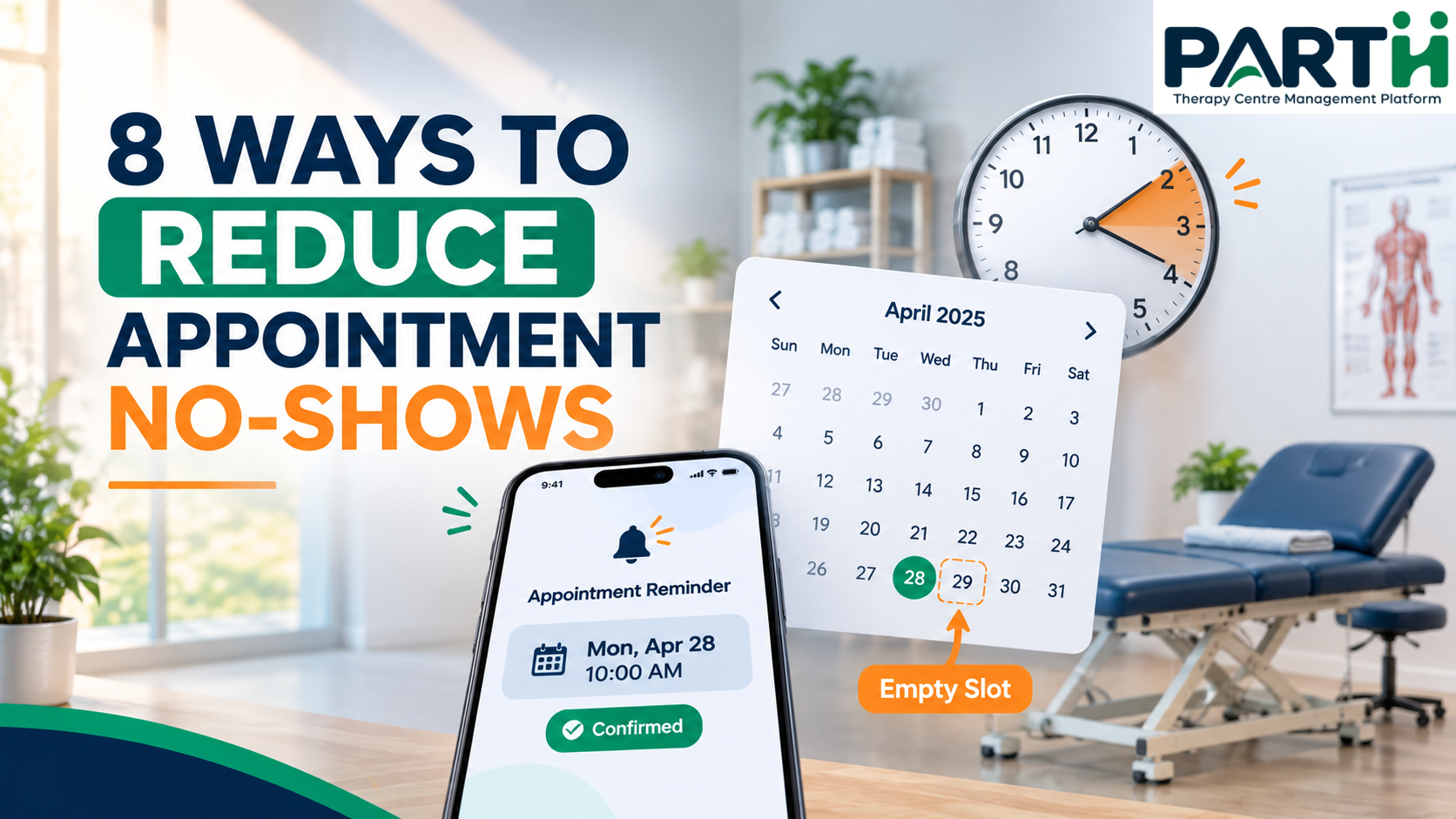
8. Reduce Missed Appointments Through Reminders
Missed appointments can interrupt the daily schedule and leave unused treatment slots.
Patients may forget their appointment time, become busy or fail to inform the clinic about cancellations.
Although not every missed appointment can be prevented, a proper reminder process can help reduce avoidable scheduling confusion.
How to improve it:
- Send reminders before scheduled appointments.
- Confirm important bookings.
- Make cancellation and rescheduling processes clear.
- Record missed appointments.
- Follow up with patients when appropriate.
Automated appointment reminders can reduce the need for receptionists to manually contact every patient.
9. Review Clinic Performance Through Regular Reports
Clinic owners need more than a daily appointment list to understand how their practice is operating.
Regular reports can help identify operational patterns and areas that may need attention.
Depending on the reporting system, useful information may include:
- Total appointments.
- Completed and cancelled appointments.
- Patient registrations.
- Therapist attendance.
- Session activity.
- Payments and pending amounts.
- Monthly financial performance.
Reviewing these details regularly helps clinic owners make more informed administrative decisions.
Reports should support management decisions, not replace clinical judgement or professional evaluation of patient outcomes.
10. Use Technology to Bring Clinic Operations Together
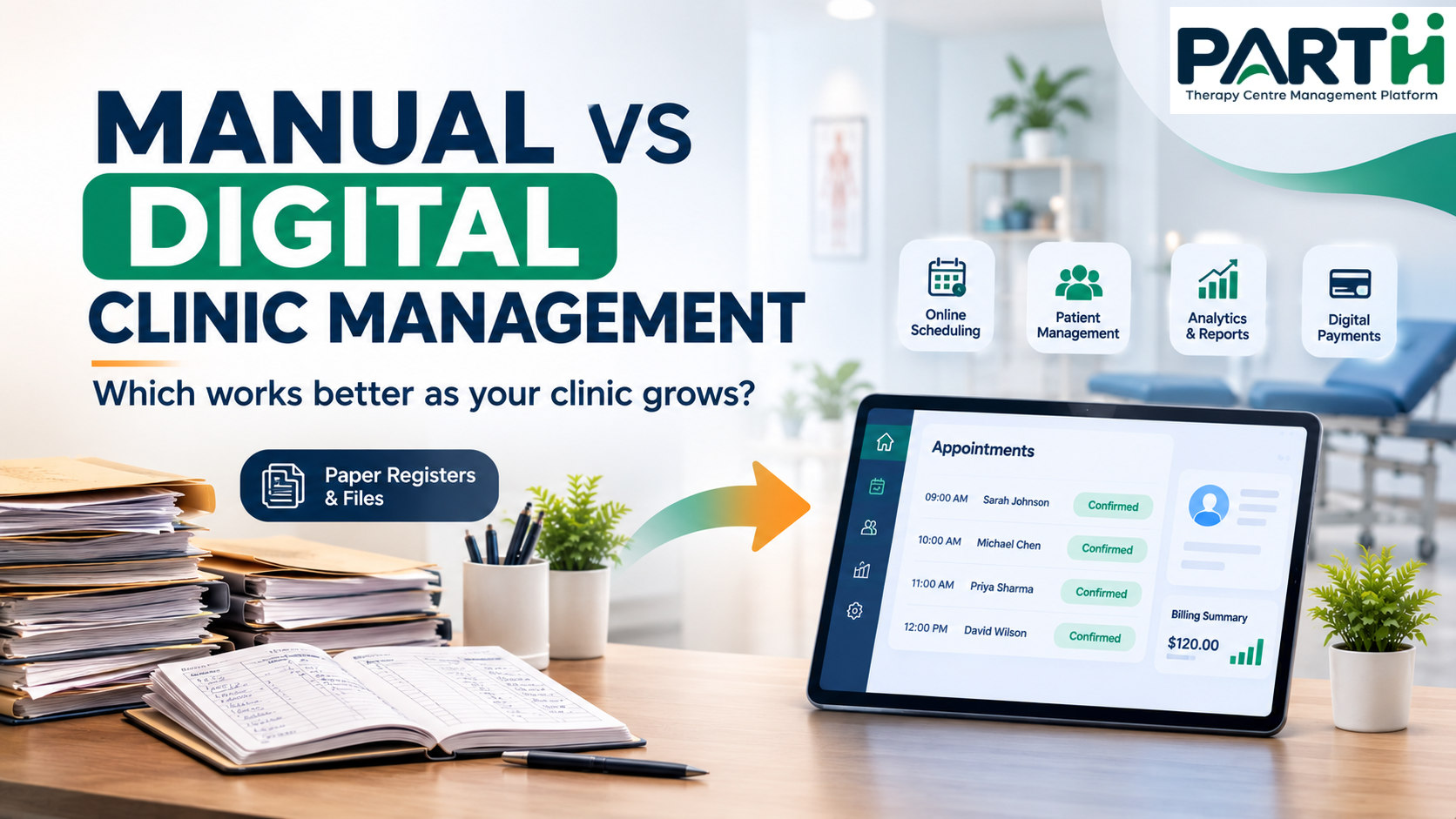
As a physiotherapy clinic grows, managing every activity through separate registers, spreadsheets and communication channels becomes increasingly difficult.
A centralised digital system can bring important administrative activities together.
Instead of switching between different records, clinic owners and authorised staff can manage appointments, patient information, therapist schedules, payments and reports through a common platform.
When selecting a digital system, look for:
- Features that match your clinic's workflow.
- Easy access for different staff roles.
- Organised patient and session records.
- Appointment and follow-up management.
- Billing and reporting capabilities.
- Appropriate data security and support.
The objective is not to introduce technology for the sake of it. It is to make everyday clinic management more organised and manageable.
Common Mistakes to Avoid When Managing a Physiotherapy Clinic
Even experienced clinic owners can face operational problems when daily processes are not clearly defined.
Here are some common mistakes worth avoiding:
1. Depending entirely on manual records
Paper records may work for smaller operations, but retrieving and updating information can become difficult as patient numbers increase.
2. Ignoring patient follow-ups
Without a consistent follow-up process, patients may miss scheduled visits or lose track of their appointments.
3. Not updating therapist schedules
Outdated availability can create scheduling conflicts and unnecessary delays.
4. Maintaining incomplete treatment records
Incomplete documentation makes it harder to review previous sessions and understand the patient's treatment journey.
5. Not reviewing clinic performance
Without regular reports, clinic owners may overlook scheduling patterns, financial gaps and staff coordination issues.
Avoiding these mistakes starts with clear processes, consistent communication and organised records.
How Parthcare Helps Physiotherapy Clinics Stay Organised
Managing a physiotherapy clinic involves several interconnected activities. Patient registration, appointment scheduling, therapist allocation, therapy sessions, billing and follow-ups all need proper coordination.
Parthcare, developed by Founders Key, is a therapy centre management platform designed to help physiotherapy clinics and therapy centres manage these activities through one system.
With Parthcare, clinics can organise:
- Patient Management: Maintain patient profiles and registration details.
- Appointment Scheduling: Manage appointments and daily schedules.
- Therapist Management: Organise therapist information and allocation.
- Therapy Session Management: Manage therapy sessions and related records.
- Patient Progress Tracking: Maintain and review patient progress.
- Follow-ups and Reminders: Organise follow-up activities and appointment reminders.
- Billing and Payments: Maintain payment records and receipts.
- Staff Management: Manage staff information and attendance.
- Reports and Analytics: Review clinic activities through reports.
- Multi-Branch Management: Organise operations across multiple branches.
By bringing these activities together, Parthcare aims to reduce dependence on scattered records and help clinic teams work in a more organised way.
Explore Parthcare: https://parthcare.com/
Conclusion
Efficient physiotherapy clinic management is not about handling more tasks in less time. It is about creating better systems for the tasks that happen every day.
A structured appointment process, organised patient records, clear therapist responsibilities, consistent follow-ups and proper financial management can make a meaningful difference to clinic operations.
As your practice grows, reviewing your existing processes and adopting suitable digital tools can help you maintain better organisation without adding unnecessary administrative complexity.
A well-managed clinic creates a better environment for both healthcare professionals and patients.
Looking to organise your physiotherapy clinic's daily operations?
Discover how Parthcare can help.
Visit: https://parthcare.com/
Frequently Asked Questions (FAQs)
1. How can I manage my physiotherapy clinic efficiently?
Start by organising appointment schedules, maintaining patient records, coordinating therapists, tracking patient progress, managing payments and establishing a consistent follow-up process.
2. What are the daily responsibilities of a physiotherapy clinic owner?
A clinic owner may be responsible for monitoring appointments, managing staff, reviewing patient-related operations, overseeing billing, handling administrative activities and evaluating overall clinic performance.
3. How can physiotherapy clinics manage multiple therapists?
Clinics can maintain centralised therapist schedules, assign appointments according to availability and clinical requirements, monitor attendance and review daily workload distribution.
4. Why is patient progress tracking important in physiotherapy?
Patient progress tracking helps therapists review changes over time, compare findings with treatment goals and make informed decisions about the ongoing plan of care.
5. How can I reduce missed appointments in my physiotherapy clinic?
Use appointment reminders, confirm important bookings, maintain clear cancellation procedures and follow up appropriately with patients who miss scheduled appointments.
6. Is clinic management software useful for physiotherapy clinics?
Yes. Suitable clinic management software can help organise patient records, appointments, therapist schedules, therapy sessions, billing and follow-ups through a centralised platform.
7. What should I look for in physiotherapy clinic management software?
Look for patient management, appointment scheduling, therapist management, therapy session records, progress tracking, billing, reporting, ease of use and appropriate data security.
8. How can I manage physiotherapy clinic records digitally?
You can use a suitable digital management system to organise patient profiles, visit history, treatment notes, appointments and relevant administrative information with appropriate access controls.