
How to Manage Multiple Therapists in a Growing Therapy Centre: 8 Practical Tips
As a therapy centre grows, managing a team of therapists becomes an important responsibility.
Each therapist may handle different patients, therapy goals, schedules and treatment approaches. Without a clear system, clinic owners may face scheduling conflicts, uneven workloads, communication gaps and incomplete session records.
Managing multiple therapists is not just about assigning work. It is about creating a coordinated environment where therapists can focus on delivering quality care.
Here are eight practical ways to manage a growing therapy team.
1. Create a Clear Therapist Schedule
Every therapist should have a clearly defined working schedule.
Maintain information about:
- Working hours and available slots.
- Breaks and leave.
- Assigned patients.
- Therapy room availability.
- Equipment or resource requirements.
A structured schedule helps reduce appointment conflicts and makes daily planning easier.
2. Allocate Patients Based on Their Requirements
Patient allocation should consider more than therapist availability.
Consider:
- The patient's therapy requirements.
- Therapist qualifications and experience.
- Therapist availability.
- Continuity of care.
- Current workload.
Clinical suitability should always come before convenience.
3. Maintain Consistent Session Records
Therapists should follow a consistent process for documenting sessions.
Useful session records may include:
- Session date.
- Therapy goals.
- Activities or interventions.
- Observations.
- Patient response.
- Recommended next steps.
Consistent documentation helps therapists understand previous sessions and maintain continuity when another team member needs to review a patient's progress.
4. Establish Clear Communication Rules
A growing team needs clear communication practices.
Decide how therapists should communicate:
- Appointment changes.
- Patient handovers.
- Important observations.
- Urgent concerns.
- Schedule updates.
- Team announcements.
Important patient-related information should be documented appropriately rather than depending only on verbal conversations.
5. Monitor Workload and Attendance
Clinic owners should understand how work is distributed across the team.
Useful information includes:
- Number of scheduled sessions.
- Attendance records.
- Therapist availability.
- Leave and working hours.
- Patient caseload.
The purpose is to identify workload imbalances and operational issues, not to compare therapists unfairly.
6. Create a Proper Patient Handover Process
Sometimes a patient may need to continue sessions with another therapist.
A proper handover should include:
- Patient goals.
- Previous session history.
- Progress observations.
- Relevant considerations.
- Recommended next steps.
This helps the receiving therapist understand the patient's journey without depending entirely on informal updates.
7. Conduct Regular Team Reviews
Short and structured team meetings can help identify problems early.
Discuss:
- Scheduling challenges.
- Patient-related coordination needs.
- Documentation gaps.
- Workload concerns.
- Process improvements.
Keep discussions focused and make sure important decisions are recorded.
8. Use Therapy Centre Management Software
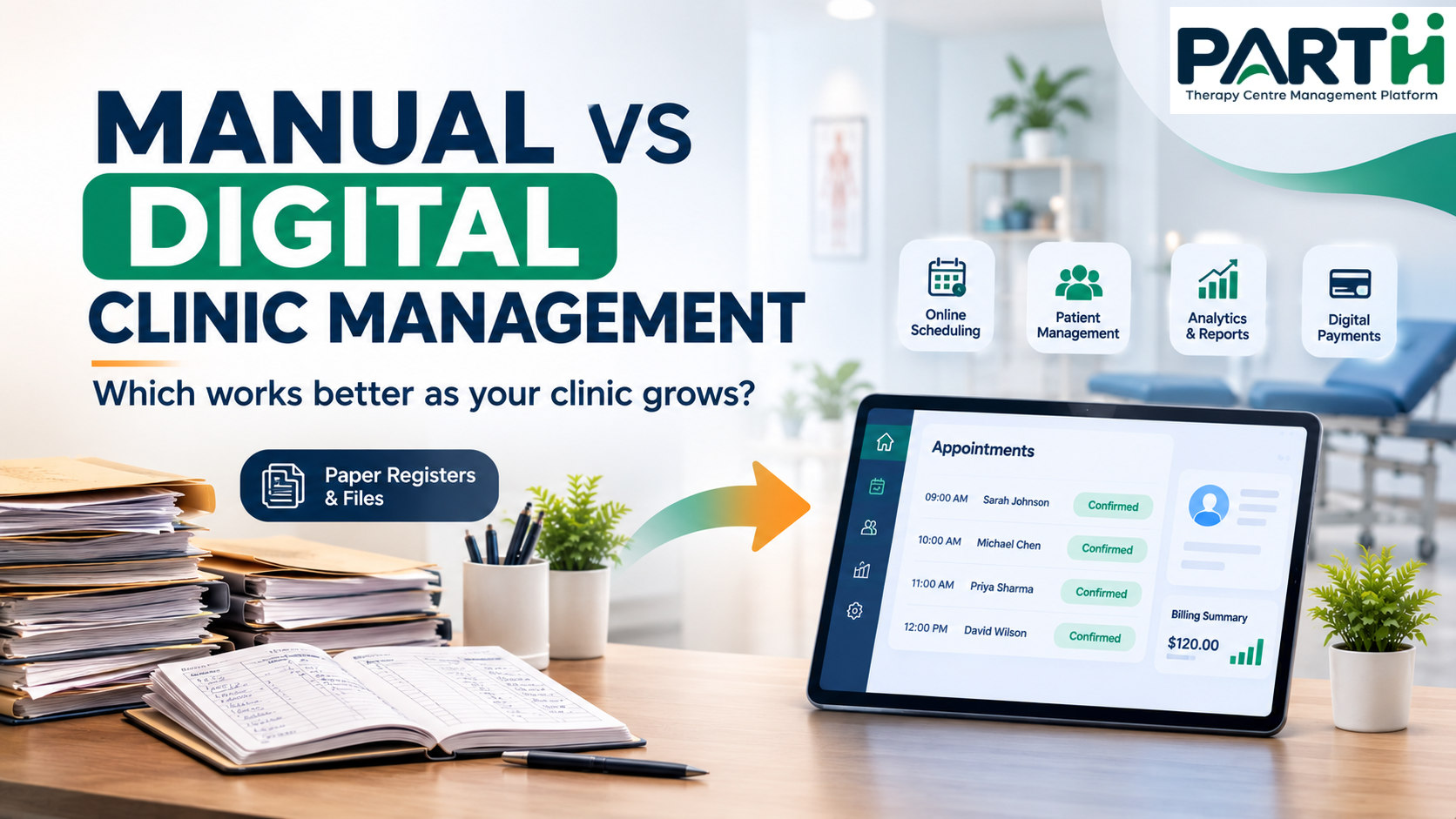
When a centre manages several therapists, maintaining information across separate registers and spreadsheets can become difficult.
Therapy management software can help organise:
- Therapist profiles.
- Appointment schedules.
- Patient allocation.
- Session records.
- Attendance.
- Patient progress.
- Operational reports.
A central system can make relevant information easier for authorised team members to access.
Common Mistakes to Avoid
Even a well-managed therapy centre can face problems if basic processes are unclear.
Avoid these mistakes:
- Assigning patients only according to availability.
- Allowing every therapist to maintain records differently.
- Depending entirely on verbal communication.
- Ignoring workload distribution.
- Making schedule changes without informing the relevant team.
- Skipping patient handovers.
- Reviewing performance without considering patient requirements and clinical context.
How Parthcare Supports Therapist Management
Parthcare helps therapy centres organise important operational activities through features such as:
- Therapist management.
- Appointment scheduling.
- Patient management.
- Therapy session records.
- Attendance management.
- Progress tracking.
- Reports.
These tools help bring important clinic activities into one organised platform.
Learn more at Parthcare.
Conclusion
Managing multiple therapists requires clear schedules, appropriate patient allocation, consistent documentation and effective communication.
As a therapy centre grows, structured processes become increasingly important.
With the right workflow and suitable management software, clinic owners can coordinate their teams more effectively while allowing therapists to focus on patient care.
Frequently Asked Questions
1. How do you manage multiple therapists in a clinic?
Create clear schedules, allocate patients according to clinical requirements, maintain session records and establish consistent communication processes.
2. Why is therapist scheduling important?
It helps manage availability, reduce appointment conflicts and coordinate patient sessions.
3. How should patients be allocated to therapists?
Consider the patient's needs, therapist qualifications, experience, availability and continuity of care.
4. What should therapists document after each session?
They should record the session date, goals, activities, observations, patient response and relevant next steps.
5. How can clinic owners monitor therapist workloads?
They can review schedules, attendance, caseloads and session records while considering the context behind the numbers.
6. Why is patient handover important?
It helps another therapist understand the patient's history, goals and previous observations.
7. Can software help manage multiple therapists?
Yes. Suitable software can help organise therapist schedules, patient allocation, attendance and session records.
8. What is the biggest challenge in managing a growing therapy team?
Maintaining coordination across schedules, patient information, communication and documentation as the team grows.